Colloquium
Time: 11:00am, Dec 3, 2025
Venue: Lecture Hall, Shanghai Brain Center
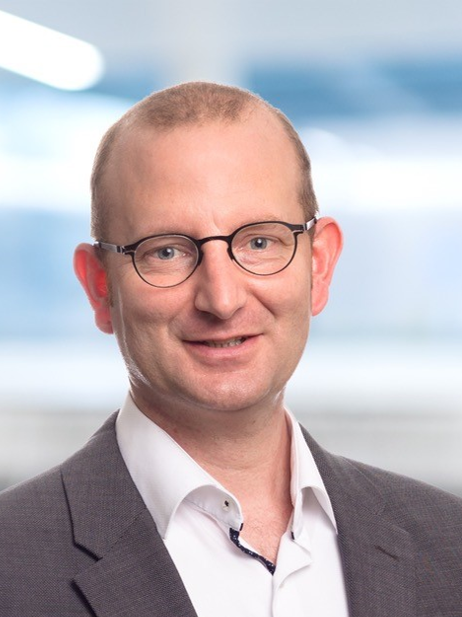
Speaker: Prof. Antoine Adamantidis
Professor, Department of Neurology,University of Bern,Switzerland
Host:Prof. Nikos Logothetis
Biography:
Prof. Antoine Adamantidis is an Associate Professor of System Neurophysiology in the Dept of Neurology at the University of Bern, Switzerland. He is also the Director for the Zentrum Fur Experimentelle Neurologie (ZEN) at the Inselspital University Hospital Bern, Switzerland. He obtained his PhD from the University of Liege, Belgium, and trained as a Postdoctoral Fellow and a Research Associate in the lab of Prof. Luis de Lecea at Stanford University School of Medicine, USA where he pioneered in vivo Optogenetics technology to study the brain mechanisms of arousal and sleep. He joined the Department of Psychiatry at McGill University, Montreal, Canada as a Tenured-track Assistant Professor before moving to the University of Bern.
Prof. A. Adamantidis’s research objectives aim at investigating the wiring, firing dynamics and plasticity of the neural circuits regulating sleep-wake states in normal and pathological states using in vitro and in vivo optogenetics combined to in vivo imaging and electophysiological methods in mice. His work is driven by questions such as What define a sleep/wake circuit and its dynamics across states? and how sleep promotes brain plasticity in health and diseases? His laboratory identified brain circuits essential for the architecture of sleep (i.e., sleep-wake switches) and brain plasticity during sleep. More recently, his lab demonstrated that sleep waves slow waves are essential to support brain plasticity after stroke, and discovered a new mechanisms for brain plasticity during REM sleep important for the consolidation and transformation of emotional memories.
Prof. Antoine Adamantidis received several awards including the Swiss Brain League Prize, the Pfizer Research Award, the R. Broughton Young Investigator Award (Canadian Sleep Society), ERC grants (starting & consolidator), a Canadian Research Chair in Neural circuits and Optogenetics, a NIH Pathway to Independence (PI) Award-K99/R00 (USA), NARSAD (now Behavioral Brain Foundation) and Sleep Research Society Young Investigator Award (USA). He is a Senior Editor for the European Journal of Neuroscience (official journal of FENS) and the Deputy Editor-in-Chief (Basic) for SLEEP (official journal of the American Sleep Research Society).
Abstract:
Sleep is an active state critical for processing emotional memories encoded during waking in both humans and animals. There is a remarkable overlap between the brain structures and circuits active during sleep, particularly rapid eye-movement (REM) sleep, and the those encoding emotions. Accordingly, disruptions in sleep quality or quantity, including REM sleep, are often associated with, and precede the onset of, nearly all affective psychiatric and mood disorders. In this context, a major biomedical challenge is to better understand the underlying mechanisms of the relationship between (REM) sleep and emotion encoding to improve treatments for mental health.
This lecture will summarize our investigation of the cellular and circuit mechanisms underlying sleep architecture, sleep oscillations, and local brain dynamics across sleep-wake states using electrophysiological recordings combined with single-cell calcium imaging or optogenetics. The presentation will detail the discovery of a 'somato-dendritic decoupling' in prefrontal cortex pyramidal neurons underlying REM sleep-dependent stabilization of optimal emotional memory traces. This decoupling reflects a tonic inhibition at the somas of pyramidal cells, occurring simultaneously with a selective disinhibition of their dendritic arbors selectively during REM sleep. Recent findings on REM sleep-dependent subcortical inputs and neuromodulation of this decoupling will be discussed in the context of synaptic plasticity and the optimization of emotional responses in the maintenance of mental health.