Colloquium
Time: 3:00pm, Nov 17, 2025
Venue: Lecture Hall, Shanghai Brain Center
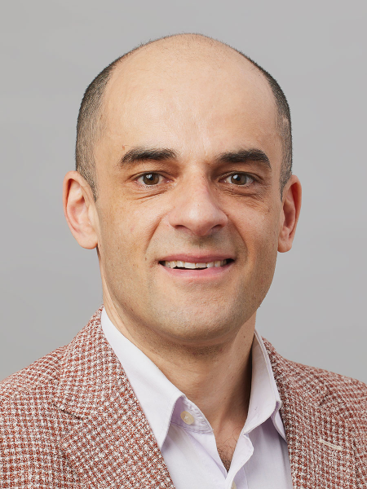
Speaker: Prof. Daniel Razansky
Professor, University of Zurich and ETH Zurich, Switzerland
Host:Dr. Goran Angelovski
Biography:
Daniel Razansky is Full Professor of Biomedical Imaging with a double appointment at the Faculty of Medicine, University of Zurich and Department of Information Technologies and Electrical Engineering, ETH Zurich in Switzerland. Previously he was Professor of Molecular Imaging Engineering at the Technical University and Helmholtz Center Munich in Germany. He earned Biomedical and Electrical Engineering degrees from the Technion - Israel Institute of Technology and conducted postdoctoral research at the Harvard Medical School. His Lab pioneered several technologies for pre-clinical research and clinical diagnostics, among them the multi-spectral optoacoustic tomography and its multimodal combinations with therapeutic and diagnostic ultrasound, fluorescence microscopy, and magnetic resonance imaging. Prof. Razansky’s research has been recognized by the German Innovation Prize, IPPA James Smith Prize, and multiple awards from the ERC, NIH, HFSP, SNSF, and DFG. He is a Fellow of the IEEE, SPIE, and Optica Societies.
Abstract:
Development of more efficient and less intrusive ways to alter and observe brain activity is instrumental towards tackling neurological diseases in an aging population and for advancing basic neuroscience research. Light- and ultrasound-based technologies are growingly used for brain interrogation, modulation of neural activity, and treatment of brain diseases. The talk introduces the imaging techniques commonly used for functional brain imaging and the motivation behind developing new approaches for interfacing with the brain. We will then dive into the latest additions to the arsenal of multi-scale neuroimaging techniques developed by our group, including whole-brain functional optoacoustic imaging, localization optoacoustic tomography, super-resolution fluorescence angiography, as well as their multi-modal combinations with functional ultrasound, magnetic resonance imaging and more. The new methods enable transcranial large-scale recordings of neural and hemodynamic activity and molecular agents at penetration depths and spatio-temporal resolution scales not covered with the existing micro- and macro-scopic functional neuroimaging techniques. Examples of applications include large-scale monitoring of neurovascular coupling and neural activity indicators, tracking circulating cells and microrobots, targeted molecular imaging of Alzheimer’s and Parkinson’s, studying microcirculation in stroke. Our current efforts are also geared toward employing optical and optoacoustic techniques for monitoring the effects of transcranial ultrasound stimulation in the living brain. The marriage between light and sound thus brings together the highly complementary advantages of both modalities toward high precision interrogation, stimulation, and therapy of the brain with strong impact in the fields of neuromodulation, gene and drug delivery,or noninvasive treatments of neurological and neurodegenerative disorders.