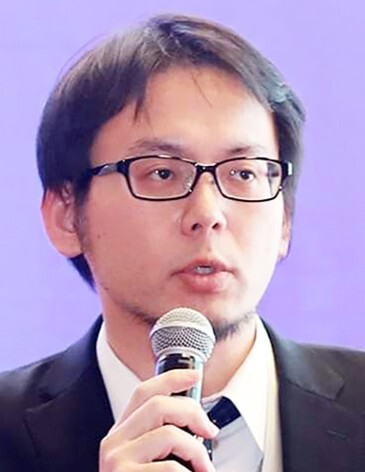
Seminar
Time: 11:00am, May 13, 2026
Venue: Room 219, International Center for Primate Brain Research (Building 5, No. 500 Qiangye Road)
Speaker: Dr. Reona Yamaguchi
Institute for the Advanced Study of Human Biology (ASHBi)
Kyoto University, Japan
Host:Dr. Henry Evrard
Biography:
Reona Yamaguchi obtained his PhD from Kagoshima University (2016) and move to University of Washington as a postdoc (2016-2017). After that, he moved to Kyoto University as an assistant professor. He was appointed assistant professor in 2019 at the Institute for the Advanced Study of Human Biology (ASHBi) of Kyoto University. Reona studies the neural mechanism for the control of dexterous hand movements and functional recovery after the brain and spinal cord injury.
Abstract:
Recent studies have shown that brain areas not typically involved in motor control can contribute to motor recovery after central nervous system injury. However, the underlying mechanisms remain unclear. In this study, we investigated the motor networks involved in recovery after sub-hemisection spinal cord injury at the C4/C5 level in macaque monkeys. We chronically implanted multichannel ECoG electrodes over the bilateral premotor cortex, primary motor cortex, and somatosensory cortex, and monitored cortical activity longitudinally. After the lesion, the monkeys were unable to perform a reach-and-grasp task. However, monkeys that received cortical electrical stimulation began to recover grasping ability between post-injury Weeks 3 and 4. The stimulation protocol consisted of 3 mA cathodic pulses, 3 pulses at 20 Hz per train, 100 trains per site per week, delivered to 18 cortical sites per hemisphere, for a total of 36 bilateral sites. Muscle twitches were first evoked from the contralesional premotor and primary motor cortices around Week 2, initially in proximal muscles, then gradually spread to distal muscles, and were later evoked from the ipsilesional premotor and primary motor cortices. We next analyzed cortical activity and connectivity during movement. During grasping, activity in the contralesional premotor and primary motor cortices increased in the α-band (8–12 Hz) and high-γ band (71–120 Hz). Furthermore, connectivity from the ipsilesional premotor cortex to the contralesional premotor, primary motor, and somatosensory cortices was enhanced in the α-band during recovery. Finally, we investigated morphological changes in the corticospinal tract. In monkeys that exhibited global cortical disinhibition, a greater number of labeled axons originating from the contralesional primary motor cortex were observed in the bilateral spinal gray matter both rostral and caudal to the lesion site. In addition, more labeled axons were distributed in laminae VIII and IX at the ipsilesional C6 level, where hand motor nuclei are located. Together, these findings suggest that bilateral motor cortices are involved in the recovery process after severe spinal cord injury, and that cortical networks operating in distinct frequency bands may contribute differently to functional recovery.