Seminar
Time: 11:00am, June 18, 2026
Venue: Lecture Hall, Shanghai Brain Center
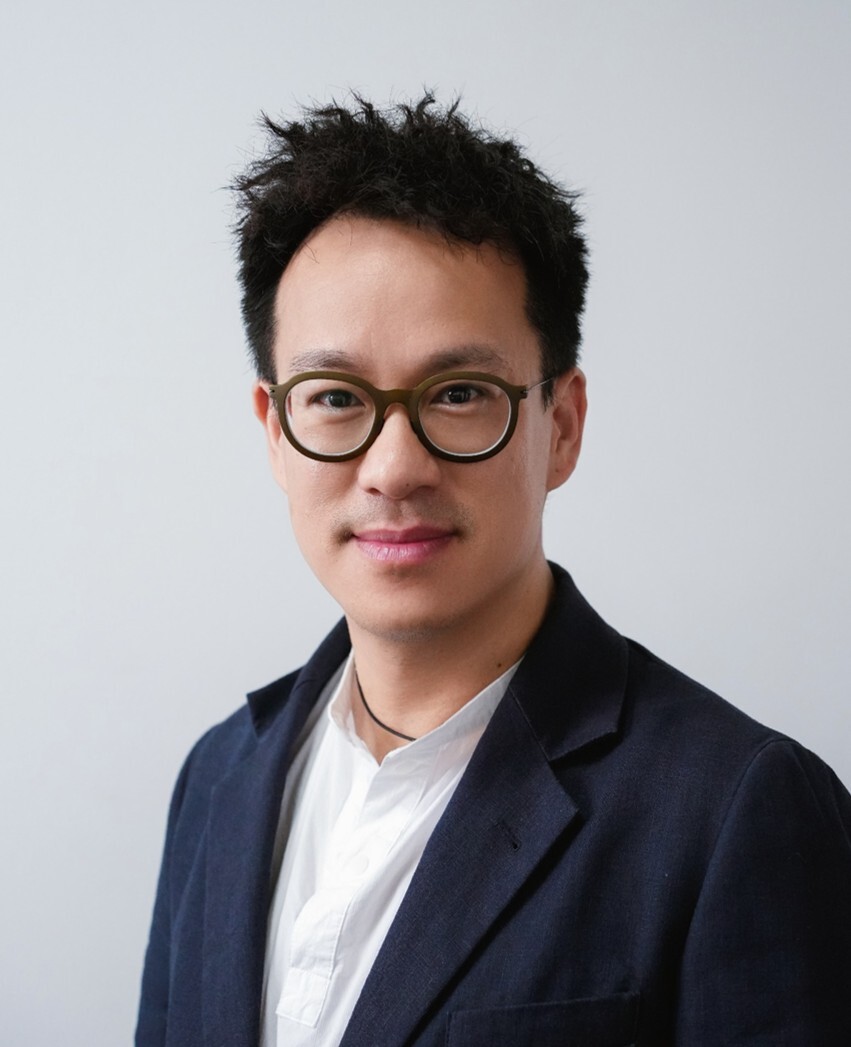
Speaker: Sze Chai Kwok
Associate Professor of Cognitive Neuroscience Laboratory of Phylo-Cognition Duke Kunshan University
Host:Dr. Henry Evrard
Biography:
Sze Chai Kwok is a tenured Associate Professor of Cognitive Neuroscience at Duke Kunshan University. His research lies at the intersection among neuroscience, behavior, and cognition. He is head of the Laboratory of Phylo-Cognition (www.kwoklab.org) and his research team studies the neural bases of memory, episodic time, metacognition, and other related higher cognitive processes across mammalian species. Before joining Duke Kunshan, he was associate professor at East China Normal University and held a scholar-in-residence position at NYU Shanghai. He has a bachelor's degree in social sciences from the University of Hong Kong and a DPhil in experimental psychology from the University of Oxford. He did his post-doc training in Santa Lucia Hospital in Roma.
Abstract:
How does the brain transform continuous experience into temporally organized episodic memories? In this talk, I will present a series of studies from our group combining intracranial electrophysiological recordings, naturalistic behavioral paradigms, and population-level neural analyses to investigate how the brain encodes and reconstructs experience across time.
Using large-scale intracranial neuronal recordings in macaque medial posterior parietal cortex during naturalistic temporal order memory tasks, we identified slowly evolving temporal context representations that span multiple timescales during encoding. Ensemble activity reliably tracked the passage of time throughout continuous experience, and the fidelity of these temporal representations predicted subsequent memory performance. During retrieval, successful temporal order judgments were associated with enhanced spike-train synchrony and stronger reinstatement-like similarity between encoding and retrieval population states, suggesting that episodic retrieval depends on coordinated population dynamics rather than isolated single-neuron responses alone.
I will further discuss ongoing work on intracranial patients examining replay-like reinstatement and generalized temporal representations during naturalistic cognition, including how distributed neural trajectories may support flexible reconstruction of past experience. Together, these findings support the idea that temporally structured neural population dynamics may provide a general computational scaffold for organizing episodic experience and reconstructing memories across time.
The work highlights how systems neuroscience approaches can bridge single-neuron activity, population dynamics, and naturalistic cognition to study episodic memory at multiple levels of analysis.