Colloquium
Time: 11:00am, Dec. 1, 2026
Venue: Lecture Hall, Shanghai Brain Center
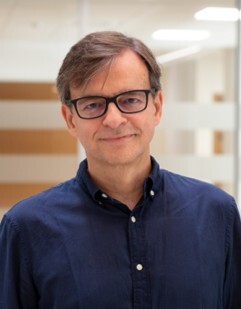
Speaker: Prof. Santiago Canals Gamoneda
Spanish Research Council (CSIC), Institute of Neurosciences, Alicante, Spain
Host:Prof. Nikos Logothetis
Biography: CV.pdf
Abstract:
Episodic memory formation requires hippocampal circuits to reconcile two competing demands: sensitivity to subtle differences between experiences and stability of stored representations despite noise and interference. The dentate gyrus (DG) is thought to support discrimination through sparse granule cell activity maintained by perisomatic inhibition. However, excessive sparsity compromises recruitment of CA3, suggesting that inhibitory control must adapt to task demands.
I will present evidence from in vivo electrophysiology, layer-specific LFP decomposition, pharmacogenetics, fMRI, behaviour and computational modelling showing that parvalbumin (PV)-mediated perisomatic inhibition in the DG regulates this trade-off. Long-term potentiation of perforant pathway inputs strengthens excitatory drive to granule cells while reducing feedforward perisomatic inhibition, promoting burst firing and information transfer to CA3. Brain-wide fMRI further reveals that DG disinhibition facilitates the propagation of hippocampal activity into a distributed network including the prefrontal cortex and nucleus accumbens. Finally, bidirectional manipulation of DG PV interneurons during encoding shifts memory performance along a sensitivity–consistency continuum: reduced inhibition improves fine spatial discrimination under low memory load but increases susceptibility to interference as the number of stored representations grows.
Together, these findings identify DG perisomatic inhibition as a dynamic regulator of memory sensitivity and consistency, with no fixed optimal inhibitory tone but rather a load-dependent operating point.